
Will you give a piece of yourself? Over the years, I have told my family many times that I want to donate my organs if I should die. I often ask, why would you choose not to donate? For some individuals, they may not think about it or maybe they think donating an organ is just too risky. In fact, there are many misconceptions that exist about organ donation.
A family may believe that organs are harvested prematurely. You hear stories all the time about individuals that have been in a coma for years and then for some miraculous reason; they just wake it. Is there an answer for this. I am not sure. The individual or the family must give consent and sometimes this may be a difficult task.
There are also may be religious concerns. An individual may believe they must have their body intact in order to move onto the after life. Some religions may not allow organ donation at all.
These concerns need to be addressed on a case by case basis. Regardless of these potential issues organ donation is an important way for individuals to give and a way to help others.
Facts About Organ Donation
Heart, kidneys, pancreas, lungs, liver, and intestines can be donated. In addition, you can donate your eyes, and other tissue, such as heart valves, cardiovascular tissue, bone, and soft musculoskeletal tissue, and skin.
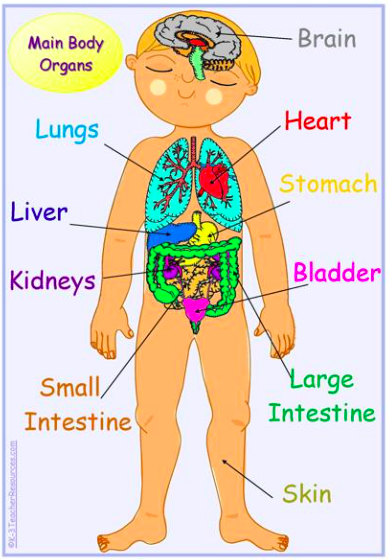
- You are never too old to donate. So do not rule yourself out. 92 year old individuals have donated their livers.
- A single donor can save up to 8 lives and affect the lives of more than 50 people.
- There is a shortage of organ donors. More than 117,000 women, men and children in the United States are waiting for an organ transplantation.
- The family of the donor does not pay for any costs related to donation.
There are not enough organs donated by deceased donors to supply the need of patients that are waiting on organs, so there are transplant teams that help living patients donate. An individual can donate a kidney, a portion of their liver, a portion of their lung, and even possibly a portion of their pancreas.
Donor families and recipients are anonymous. Basic information is often known, including approximate age, sex, and the state the individual lives in.
To register as an organ donor in Missouri you can register online or in person at your local Missouri Department of Revenue office.
Go to https://www.organdonor.gov/index.html
You can also add your name to the state’s donor registry every time you apply for or renew your Missouri driver’s license or state ID card.
Adding your name to the organ donor registry helps reinforce your commitment and can reduce confusion at the time of your death. Consent of your family is not required for donation but letting your family know about your decision to donate is important.
In many states, if you work in health care you can not address the option of organ donation if you are not certified through the American Board for Transplant Certification (ABTC) as a Certified Procurement Transplant Coordinator (CPTC), Certified Clinical Transplant Coordinators (CCTC), Certified Clinical Transplant Nurse (CCTN), or Certified Transplant Preservationist (CTP). There are several requirements that allow individuals to be eligible. Most often experience and direct care with individuals that require organ transplantation.
I recently had a meeting with a couple of neurosurgeons and I posed the question to them. Do you plan on giving (by the way they do) ? But I actually went a step further and asked, “Do you promote donation? I posed this question because a neurosurgeon can often be involved with end of life care. The answer I received was somewhat shocking. I automatically assumed that the neurosurgeons may be the last chance for an individual to donate, but this is not necessarily the case. There are many individuals involved with organ donation, which includes individuals affiliated with the registry, nurses, physicians, etc.
I think organ donation is the best gift ever and you can continue giving after you are long gone. The most unselfish gift ever. What a wonderful way to help others. According to the Missouri donor site, you have the power to donate life. Currently 3,752,270 individuals are registered to donate as of May 15, 2018. I have actually been working on this posting for at least one month and I thought it would be posted in April but unfortunately, life got in the way.
Accidents Happen
I was on vacation in Kitty Hawk, North Carolina and I had a bicycle accident and I broke my shoulder. This may not sound too bad but you see I am a work-a-holic so it is a huge problem. Now, I have not been able to work. This has really caused me to reflect on what I am doing and if I am making a difference. Donation flashed momentarily in my mind while I was being evaluated after the accident. What if I hit my head and I actually have a concussion. Do I have a simple fracture or do I have something more serious? Is my vacation over or even my life? Will I donate?
So will you give…
If you have any topics that you are interested in or would like to hear about please let me know. Thank you for reading and I hope you enjoyed this blog.





 Nursing Me